Petra Hartmann · 11 September 2026
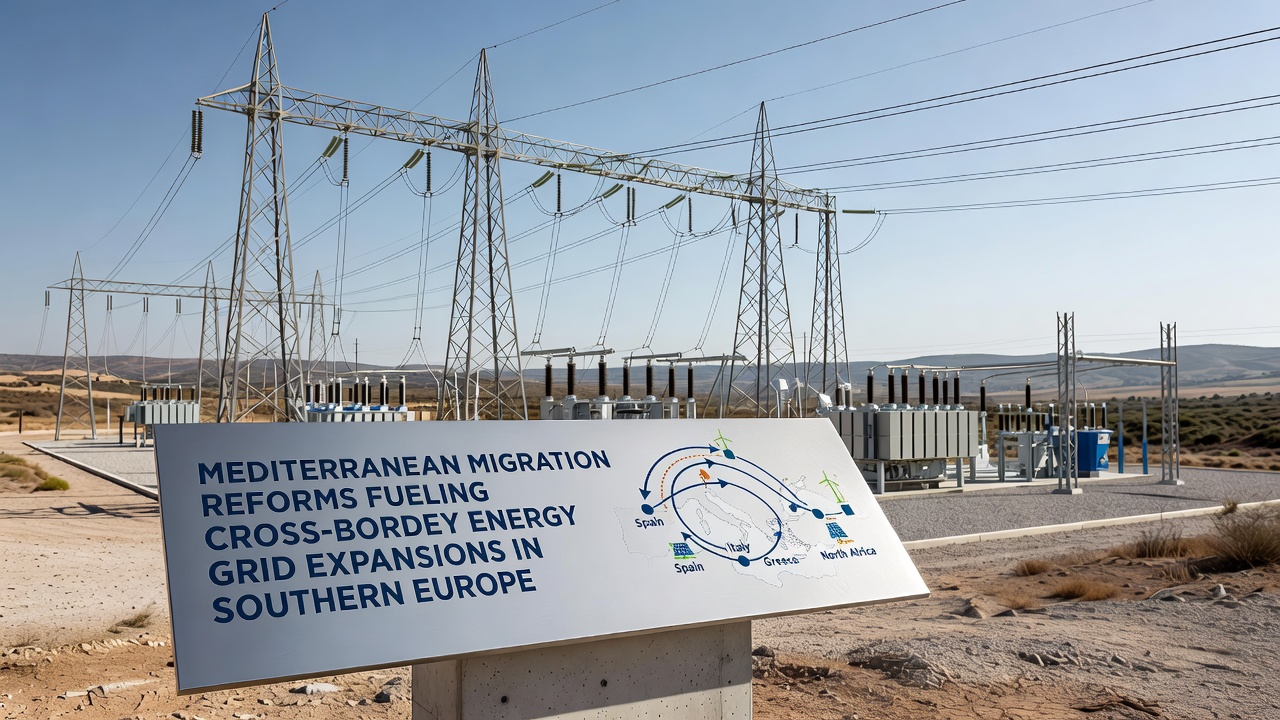
Mediterranean Migration Reforms Fueling Cross-Border Energy Grid Expansions in Southern Europe
Policy shifts across the Mediterranean region have connected migration management frameworks with infrastructure investments in energy transmission, and these developments have accelerated cross-border electricity grid projects in countries such as Italy, Spain, and Greece since the mid-2020s. European Union member states have adjusted bilateral agreements with North African and Middle Eastern partners, incorporating provisions that allocate resources for renewable energy corridors while addressing population movements through structured labor pathways.
Policy Linkages Between Migration and Energy Infrastructure
Reforms introduced under the EU Migration and Asylum Pact have included clauses that tie development aid to joint energy initiatives, and data from the European Commission shows that funding streams for grid interconnections have grown by 18 percent in southern member states between 2024 adn 2026. These adjustments allow participating countries to channel remittances and workforce programs into technical training for high-voltage line construction, while governments in Tunisia and Morocco have signed pacts that facilitate worker mobility in exchange for technology transfers related to solar and wind integration.
Observers note that the September 2026 rollout of updated Mediterranean Partnership frameworks will expand eligibility criteria for energy project permits, and this timing aligns with the completion of several undersea cable feasibility studies linking Sicily to Tunisia. National energy agencies in Spain have reported that similar reforms have streamlined permitting for the proposed Biscay Gulf interconnection, where labor agreements have supplied specialized crews for cable-laying operations.
Technical Expansions Underway in Southern Europe
Grid operators have begun deploying high-capacity interconnectors that cross the Mediterranean Sea, and Italy's Terna has advanced the Tyrrhenian Link project to connect Sardinia, Sicily, and the mainland peninsula wth 950 kilometers of submarine cable rated at 1,000 megawatts per circuit. Spanish authorities have coordinated with Moroccan counterparts on the second phase of the Chira-Soria pumped storage facility, which will stabilize variable renewable inputs flowing through new transmission lines.

Researchers at the International Renewable Energy Agency have documented that these expansions rely on coordinated migration policies because they require a mobile technical workforce capable of operating across borders during construction phases lasting three to five years. Figures released by the agency indicate that southern European grid projects have drawn on bilateral training programs established after 2023, which certify workers from partner nations in high-voltage safety standards and marine engineering protocols.
Regional Case Examples and Data Trends
In Greece, the Crete-Attica interconnection has incorporated workforce provisions from updated migration accords with Egypt, and project timelines published by the Hellenic Electricity Distribution Network Operator show completion targets set for late 2027. These accords have also directed portions of EU structural funds toward vocational centers that prepare participants for roles in cable jointing and substation commissioning.
According to reports from the U.S. Energy Information Administration, cross-border electricity trade volumes in the Mediterranean basin rose 12 percent year-over-year through the first half of 2026, and analysts attribute part of this increase to the stability provided by integrated labor and infrastructure planning. Canadian research institutions studying global energy transitions have published parallel findings that highlight how policy bundling of migration and energy reduces project delays caused by labor shortages in remote installation sites.
Future Milestones and Implementation Outlook
Stakeholders have scheduled further coordination meetings for the first quarter of 2027 to review progress on the EastMed pipeline corridor, which will transport both natural gas and hydrogen blends once grid reinforcements reach operational status. These meetings will assess whether existing migration reform mechanisms continue to supply the required engineering personnel without disrupting domestic employment balances in host countries.
Conclusion
Evidence from regulatory filings, agency reports, and project documentation demonstrates that Mediterranean migration reforms have supplied both financial instruments and human capital for cross-border energy grid expansions across southern Europe. Implementation continues through established EU partnership channels, with measurable progress tracked in interconnection capacity additions and workforce certification rates through 2026 and beyond.