Sofia Lorenz · 23 October 2026
How Revised Eurozone Price Data Is Reshaping Port Infrastructure Timelines Across Iberian Trade Corridors
Revised eurozone price data has started to influence project schedules for port expansions and upgrades in Spain and Portugal, where trade corridors handle significant volumes of goods moving between Europe, Africa, and the Americas. Data adjustments released in late 2025 prompted recalculations of construction costs tied to inflation benchmarks, and those shifts have carried forward into planning cycles that extend through 2027. Observers note that ports such as Valencia, Barcelona, and Lisbon now operate under revised funding formulas that incorporate updated Harmonised Index of Consumer Prices figures, which in turn affect the release of European Union cohesion funds and national matching contributions.
Researchers at several European transport institutes have tracked how these price revisions alter procurement timelines for dredging equipment, terminal expansions, and rail connections that link inland logistics hubs to coastal facilities. One analysis from a Spanish logistics research center showed that cost projections for container terminal upgrades rose by an average of 7 percent after the latest data release, prompting authorities to sequence work phases differently than originally planned. Construction firms working on these sites have adjusted contract milestones accordingly, with some phases pushed back by four to six months while others advanced to lock in lower material rates before further index adjustments take effect.
Updated Price Indices and Their Direct Effects on Funding Allocation
Eurostat figures released in October 2026 revealed larger-than-expected revisions to energy and construction input costs across member states, and those changes quickly fed into national budget reviews for infrastructure projects along the Iberian Peninsula. Port authorities in both countries recalibrated their multi-year investment plans because many grants from the EU's Connecting Europe Facility and national recovery programs contain clauses that tie disbursements to inflation benchmarks. When those benchmarks move, the total available capital changes, which forces planners to reprioritize which berths, warehouses, and hinterland connections receive immediate attention.
Port of Barcelona officials published updated timelines in November 2026 that deferred the start of a new liquid bulk terminal by one full quarter while accelerating electrification work on existing quays where material costs had stabilized. Similar adjustments appeared in Portuguese planning documents for the Port of Sines, where revised price data led managers to extend the bidding window for automated crane systems so suppliers could incorporate the latest cost indices into their proposals. These sequential shifts illustrate how a single set of macroeconomic revisions can cascade through dozens of individual contracts without halting overall progress.
Regional Trade Corridors Adjust Their Development Sequences
Trade corridors that connect Iberian ports to central European markets have seen the most visible schedule changes because rail and road links often receive joint funding that depends on synchronized national price data. The Mediterranean Corridor project, which aims to improve freight movement from Algeciras through Valencia and onward to France, has incorporated new cost buffers that lengthen the completion date for certain viaduct sections by nine months. At the same time, sections already under contract moved forward on accelerated timetables to avoid exposure to further index volatility.
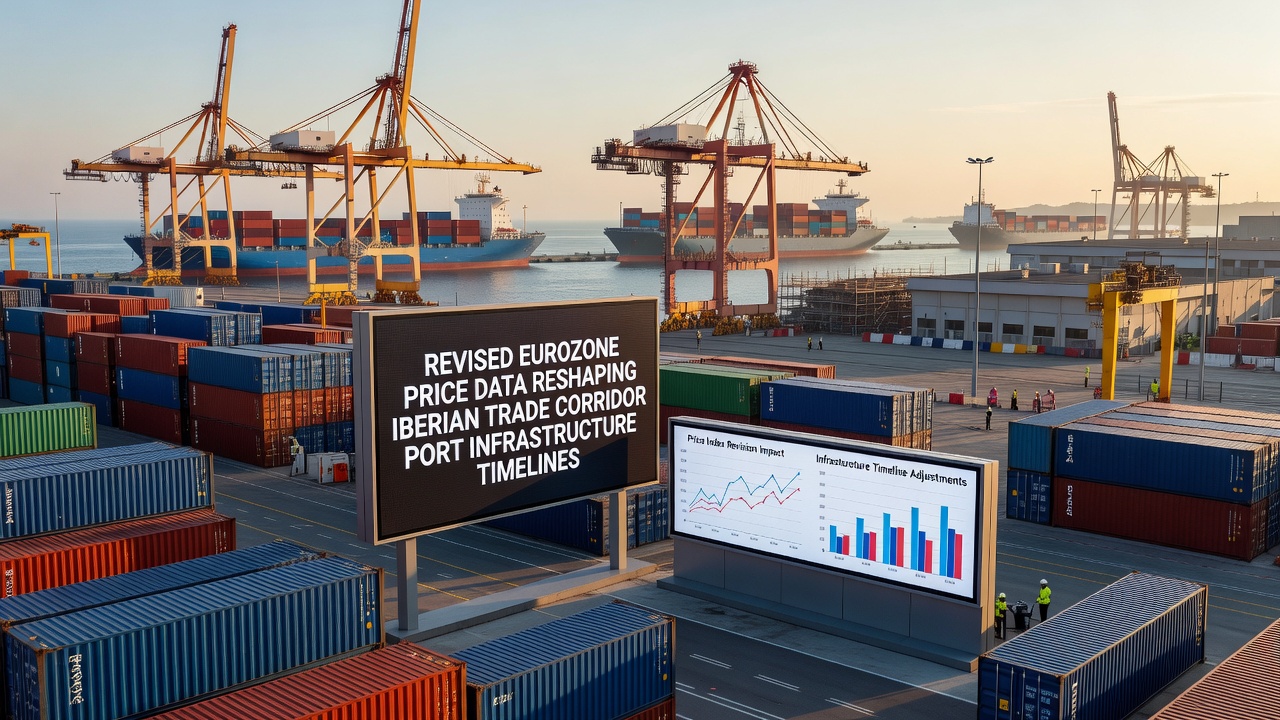
Studies from the OECD's transport division indicate that ports serving Atlantic routes have adopted more conservative phasing strategies, spacing out major civil works across additional fiscal years rather than clustering them within single budget cycles. This approach reduces the risk that sudden price swings will create funding gaps midway through construction. In practice, that means some dredging campaigns scheduled for 2027 now begin in late 2026, while certain warehouse automation projects slip into 2028 to align with expected stabilization in equipment pricing.
Supply Chain and Contractor Responses Across the Peninsula
Contractors and equipment suppliers have begun embedding flexible clauses in new tenders that reference the same eurozone price indices used by funding agencies. Those clauses allow for mid-project adjustments without requiring full contract renegotiations, which keeps work flowing even when data revisions occur. Several Spanish and Portuguese firms have reported that this structure helped them maintain workforce levels during the most recent adjustment period rather than pausing operations.
Academic researchers examining these patterns have documented how the revised data also influences insurance premiums and financing terms for large-scale port projects. Lenders now apply tighter sensitivity analyses to inflation scenarios, which in some cases has lengthened the due diligence period before loan approvals. Yet the overall pipeline of Iberian port investment remains robust because the underlying trade volumes continue to justify the expenditures once timelines are recalibrated.
Conclusion
Revised eurozone price data continues to prompt incremental adjustments to port infrastructure timelines along Iberian trade corridors, with authorities in Spain and Portugal responding through phased sequencing, flexible contracting, and updated funding alignments. Data from Eurostat and related analyses show that these shifts affect project pacing but have not derailed the broader investment programs supporting regional connectivity. As additional index revisions occur, similar recalibrations are expected to keep port development aligned with prevailing economic conditions through the remainder of the decade.